
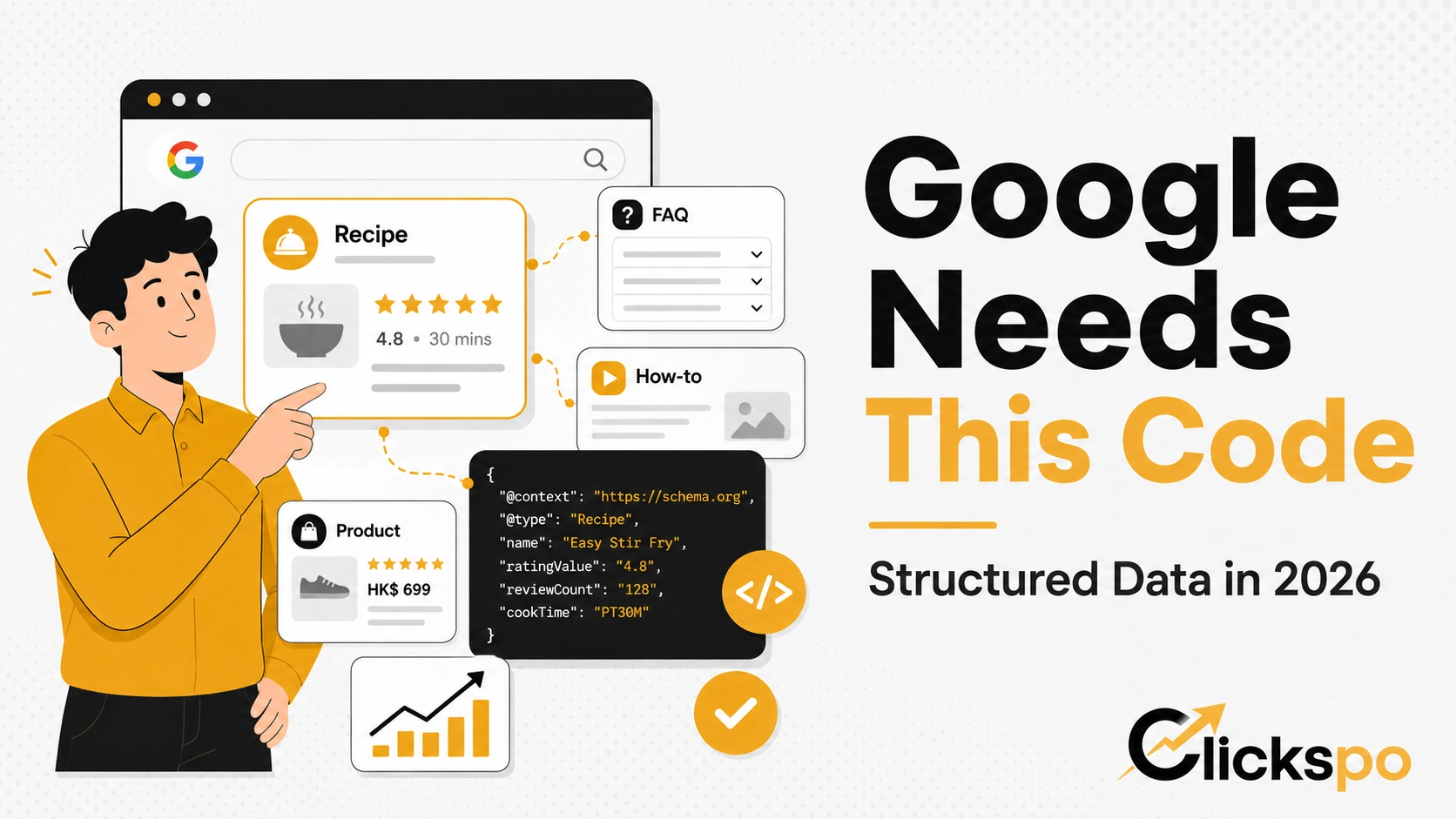
There is a version of this question that gets asked every year, and every year the answer shifts slightly as the search landscape changes. In 2026, structured data matters more than it did three years ago, but for reasons that have less to do with traditional Google rankings and more to do with how search results are now being assembled and presented. Our team at Clickspo works with structured data across client websites in Hong Kong spanning law firms, dental clinics, physiotherapy practices, gyms, and e-commerce, and the consistent finding is that most businesses are leaving significant visibility on the table by treating schema markup as optional.
This article explains what structured data actually does, where it delivers real value in the current search environment, and how to prioritise implementation across different types of Hong Kong business websites.
What Structured Data Is and How It Works
Structured data is code added to your web pages that labels your content in a format search engines can read unambiguously. Rather than leaving Google to interpret your content through natural language processing alone, structured data tells Google explicitly: this is a review, this is a product, this is a local business, this is an FAQ, this is an event.
The vocabulary used for structured data is primarily Schema.org, a shared standard maintained collaboratively by Google, Bing, Yahoo, and Yandex. The most widely used implementation format is JSON-LD, which Google recommends. JSON-LD is placed in a script tag in the page head and does not require changes to the visible HTML of the page itself, which makes it easier to implement and maintain than older formats like Microdata or RDFa.
A basic example for a local business looks like this:
<script type="application/ld+json">
{
  "@context": "https://schema.org",
  "@type": "LocalBusiness",
  "name": "Clickspo",
  "url": "https://clickspo.hk",
  "address": {
    "@type": "PostalAddress",
    "addressLocality": "Hong Kong"
  }
}
</script>
This tells Google exactly what type of entity the page represents, where it is located, and how to reference it, without Google having to infer any of that from page copy.
Does Structured Data Directly Affect Rankings?
Google has been explicit on this point for years. The presence of structured data markup is not a direct ranking factor. Adding schema to a page does not cause Google to rank it higher. If you encounter an agency or tool claiming otherwise, treat that claim with scepticism.
What structured data does affect is how your pages appear in search results, which in turn affects click-through rate and the contexts in which your content is surfaced. These are the mechanisms through which structured data delivers real SEO value.
Our Ahrefs research confirms that “structured data SEO” generates 1,800 monthly searches in the US market with a traffic potential of 9,100 and a CPC of USD 350, reflecting strong commercial intent from practitioners actively implementing this. In the Hong Kong market, “schema markup” generates 90 monthly searches at a keyword difficulty of 92, indicating that established authoritative sites are competing for this audience. The high difficulty on a relatively niche technical topic tells us that organisations with significant SEO investment are prioritising this content.
The top-ranking pages for “structured data SEO” include Google’s own developer documentation at domain rating 99 with over 11,800 referring domains, Yoast at domain rating 91, and Wix’s SEO resource at domain rating 95. This is the competitive benchmark for anyone publishing on this topic.
Where Structured Data Delivers Real Value in 2026
The case for structured data in 2026 rests on three distinct benefits, each worth understanding separately.
Rich Results in Traditional Search
The most visible impact of structured data is eligibility for rich results. These are enhanced search listings that display additional information directly in the SERP, beyond the standard title, URL, and meta description. Rich results include star ratings for reviews, pricing information for products, event dates and times, FAQ dropdowns, recipe ingredients, and many other formats.
Rich results do not guarantee more clicks for every query, but for the right content types they significantly increase visual prominence and the amount of information a user receives before clicking. A dental clinic whose Google Business listing shows star ratings and review counts alongside its search result occupies far more visual real estate than a competitor showing a plain text listing.
The schema types most relevant to the kinds of businesses we work with at Clickspo include:
| Schema Type | Business Type | Rich Result Benefit |
|---|---|---|
| LocalBusiness / MedicalClinic | Dental, physio, therapy clinics | Business details, opening hours, location in local results |
| FAQPage | All service businesses | FAQ dropdowns that expand directly in SERP |
| Review / AggregateRating | All client-facing businesses | Star ratings visible in search listing |
| LegalService | Law firms | Service type categorisation and local visibility |
| Article / BlogPosting | Content pages | Article carousels, date visibility, author signals |
| BreadcrumbList | All sites | Cleaner URL display in search results |
| Organization | All businesses | Brand knowledge panel information |
| SportsActivityLocation / HealthClub | Gyms | Activity type, facilities, location data |
Structured Data and AI Search Features
This is where the significance of structured data has grown most meaningfully in 2026. Google’s AI Overviews, which now appear for a wide range of queries, pull information from indexed pages to construct their generated summaries. Structured data makes your content significantly easier for these systems to parse accurately.
When Google’s AI assembles a summary about local dental clinics, best law firms for a specific practice area, or physiotherapy services in a given district, the businesses whose pages provide clearly labelled, structured information are more likely to be cited accurately. An unstructured page that describes a service in flowing prose requires the AI to interpret and extract meaning. A page with well-implemented schema markup announces its content type, entity relationships, and key attributes explicitly.
We explore the broader implications of this in our guide to AI search optimisation, but the practical takeaway for structured data is straightforward: schema markup is increasingly a prerequisite for accurate representation in AI-generated search features, not just a nice-to-have for traditional SERP appearances.
Entity Establishment and Knowledge Graph
Google’s understanding of the web is built increasingly around entities rather than just keywords. An entity is a distinct, identifiable thing: a business, a person, a place, an organisation. Structured data, particularly Organisation, LocalBusiness, and Person schema, helps Google understand what your business is, where it operates, who is associated with it, and how it relates to other entities in its knowledge graph.
For Hong Kong businesses trying to establish clear brand identity in search, correctly implemented Organisation schema with consistent NAP (name, address, phone) data, a sameAs property linking to your Google Business Profile and social media profiles, and appropriate business category typing lays the groundwork for how Google represents your brand across all its surfaces, including the knowledge panel that appears in branded searches.
Schema Types That Matter Most for Hong Kong Businesses
Not all schema types deliver equal value for every site. Our prioritisation for the sectors we commonly work with is as follows.
LocalBusiness and its subtypes are the foundation for any business with a physical presence or a defined service area. For dental clinics, this means Dentist schema. For physiotherapy clinics, MedicalClinic or Physiotherapy. For law firms, LegalService. For gyms, HealthClub or SportsActivityLocation. These subtypes inherit all the properties of LocalBusiness while providing Google with more specific entity classification, which improves accuracy in local search results and local pack visibility.
FAQPage schema is one of the highest practical return investments for service business websites because it makes FAQ content eligible to appear as expandable dropdowns directly in the SERP. A law firm page answering questions about family law, a dental clinic page answering questions about implant procedures, or a physiotherapy page answering questions about recovery timelines can all benefit from FAQ schema that surfaces those answers before the user even reaches the website. This type of pre-click visibility is particularly valuable given the increasing prevalence of zero-click searches.
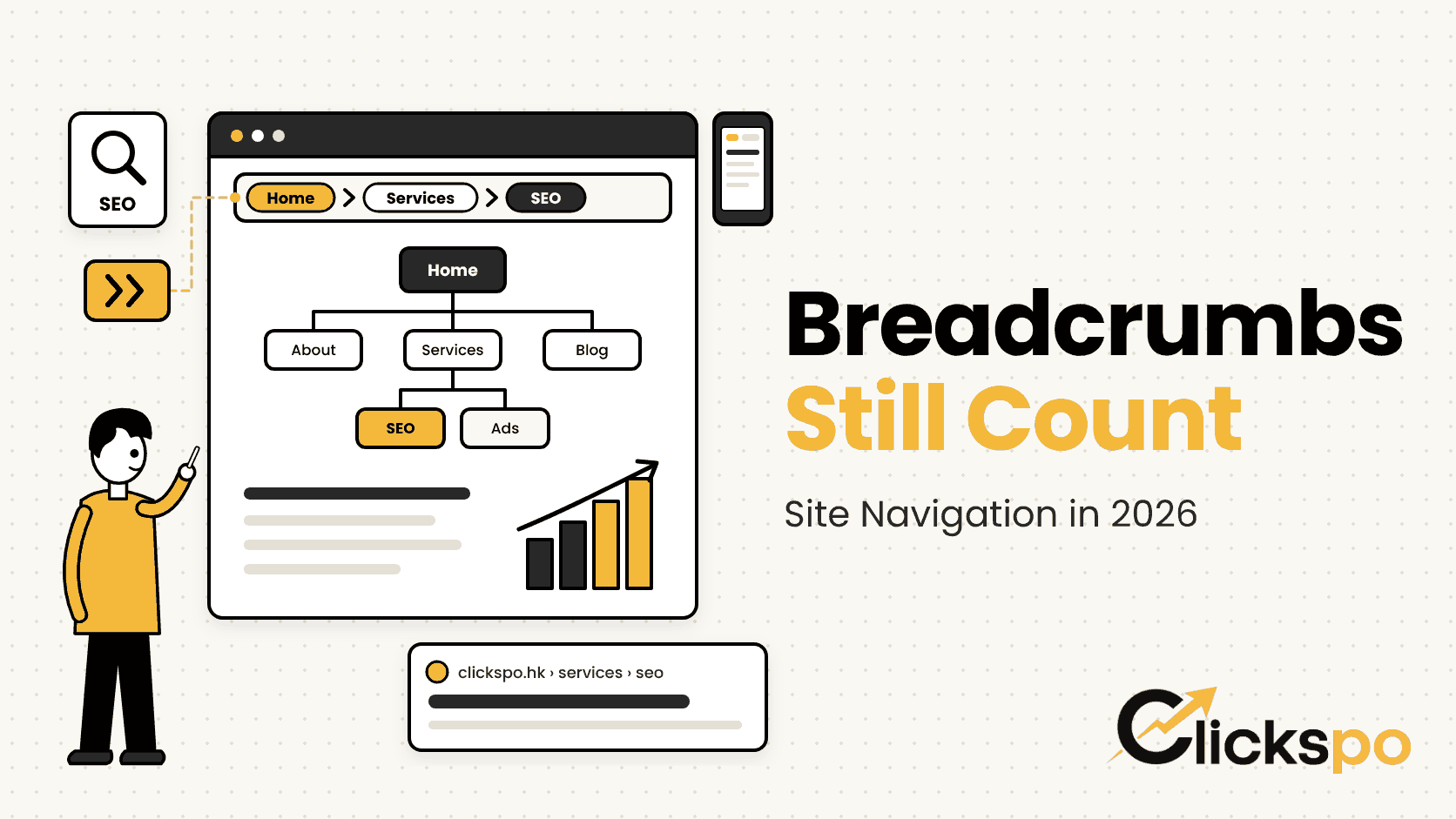
BreadcrumbList schema is worth implementing across all sites as a low-effort, high-consistency improvement. It controls how Google displays your URL structure in search results, replacing the raw URL with a readable path hierarchy. This is a minor but positive CTR influence for most sites.
Review and AggregateRating schema are high value for businesses where social proof drives conversion, which includes virtually every B2C business in Hong Kong. The important caveat here is that Google only displays review rich results when the reviews come from your own site, not third-party platforms. A dental clinic that collects patient reviews on its own website and marks them up with Review schema can display aggregate star ratings in organic search. Pointing Google to your Google My Business or Trustpilot rating through third-party schema does not achieve the same result.
Article and BlogPosting schema are worth implementing on all long-form content pages. They signal content type, publication date, author identity, and the publisher entity to Google, which supports accuracy in AI-generated summaries and in the article carousels that appear for news and informational queries.
How to Implement Structured Data Correctly
The implementation method that Google recommends, and the one we use across all client work, is JSON-LD placed in a script tag in the page head. It is clean, maintainable, and does not require changes to the visible HTML of your page.
The validation step is non-negotiable. After implementing any schema markup, test it using Google’s Rich Results Test (search.google.com/test/rich-results). This tool tells you which rich result types your page is eligible for and flags any errors or warnings in your implementation. A schema block with syntax errors or missing required properties will not generate rich results even if it is technically present on the page.
Google Search Console’s Enhancements section shows you, at scale, which schema types have been detected across your site, how many URLs carry each type, and how many have errors or warnings. This is the monitoring layer that should be checked quarterly as part of any routine technical SEO audit.
The most common implementation errors we encounter are:
- Missing required properties for a given schema type, such as omitting the address field from LocalBusiness schema
- Marking up content that does not actually appear on the page, which Google treats as spam and may penalise
- Using outdated schema types that Google no longer supports for rich results
- Implementing multiple conflicting schema blocks on the same page
- Not updating schema after page content changes, creating a mismatch between the markup and the visible content
Platform-Specific Notes for Hong Kong Sites
WordPress with Yoast SEO or Rank Math handles the most common schema types automatically, including Organisation, BlogPosting, and BreadcrumbList. For service-specific schema such as LocalBusiness subtypes, FAQPage, and Review, you will generally need to add custom JSON-LD blocks or use a dedicated schema plugin. Our WordPress SEO guide covers the plugin configuration in more detail.
Shopify generates basic Product and BreadcrumbList schema natively for product and collection pages. For richer product schema including AggregateRating, review schema, and Organisation markup, additional configuration or a schema app is typically required. See our Shopify SEO guide for platform-specific implementation details.
Wix introduced structured data support through its SEO tools and supports several common schema types. Custom schema implementation on Wix is more limited than on WordPress or custom builds. Our Wix SEO guide addresses what is achievable within the platform’s constraints.
Custom-built sites have the most flexibility for structured data implementation. Schema can be templated at the CMS level so that new content automatically inherits the correct schema structure without requiring manual markup for each new page. This is the ideal architecture for sites at scale.
Structured Data for Bilingual Sites
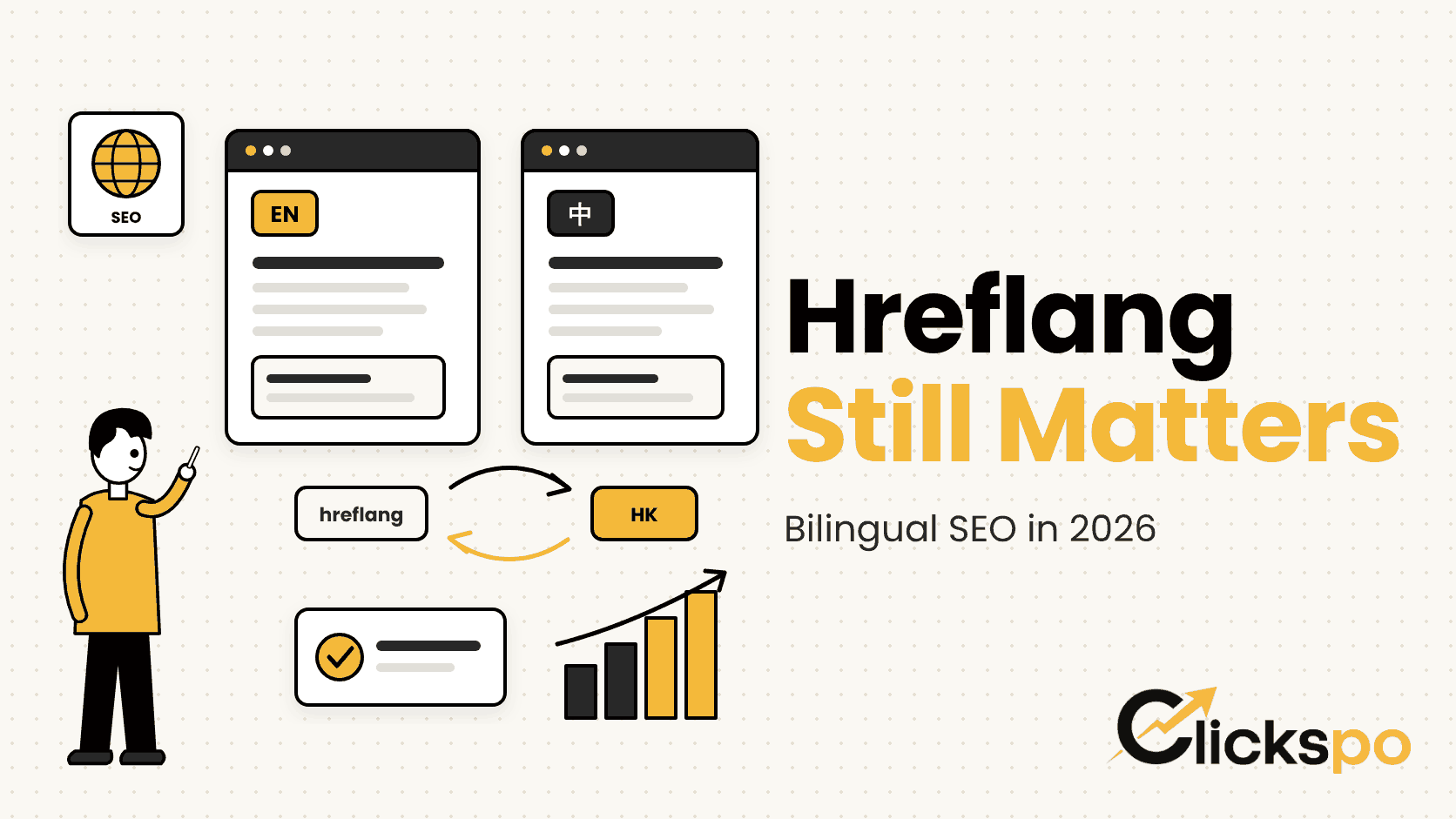
For Hong Kong businesses running both English and Traditional Chinese pages, structured data should be implemented independently on each language version. The schema content, particularly name, description, and address fields, should reflect the language of the page it is on rather than defaulting to English across all versions.
The hreflang relationship between language versions is handled in the HTML head, not in the schema itself. Structured data and hreflang operate in parallel. However, consistency in your Organisation schema across both language versions, particularly in the sameAs property linking to your Google Business Profile, reinforces entity consolidation and helps Google understand that both pages represent the same business entity.
This intersection of technical SEO elements is one of the reasons we treat keyword research and technical implementation as integrated disciplines rather than separate tracks when working with Hong Kong clients who target both language audiences.
FAQs About Structured Data and SEO
Does structured data directly improve my Google rankings?
No. Google has confirmed this repeatedly. What structured data does is change how your pages appear in search results through rich results eligibility, improve how accurately AI-generated search features represent your content, and help Google understand your entity relationships more clearly. These contribute to better visibility and higher click-through rates, which in turn affect the traffic your rankings actually deliver.
Which schema type should I implement first?
For most Hong Kong service businesses, the priority order is: LocalBusiness or its relevant subtype first, then FAQPage on your key service pages, then BreadcrumbList across the whole site, then Article or BlogPosting on your content pages, then Review or AggregateRating if you collect reviews on your own website. Organisation schema should be implemented on your homepage from the outset.
Can I add structured data without a developer?
For WordPress sites using Yoast SEO or Rank Math, many common schema types can be configured through the plugin interface without writing code. For custom JSON-LD blocks, basic schema can be written and added manually by a non-developer using Google’s documentation and the Rich Results Test to validate the output. For complex implementations across large sites, developer involvement is recommended to ensure schema is templated and consistent rather than manually maintained.
What happens if I implement structured data incorrectly?
Google will typically ignore incorrect schema rather than penalising the page for it. However, if you mark up content that is not present on the page, or deliberately misrepresent your content through schema, Google can take a manual action against the site. Beyond penalties, incorrect schema simply means you are not receiving the rich result benefits you intended. Validation through the Rich Results Test before publishing prevents most errors.
Is structured data the same as Open Graph tags?
No. Open Graph tags are a separate protocol used by social media platforms to control how your pages appear when shared on Facebook, LinkedIn, and other platforms. They do not affect Google search results. Structured data using Schema.org vocabulary affects how Google represents your pages. Both are worth implementing, but they serve different channels and operate independently.
How does structured data interact with Google Business Profile?
They are complementary rather than redundant. Your Google Business Profile controls how your business appears in Google Maps and the local pack. LocalBusiness schema on your website reinforces the entity signals that Google uses to verify and populate your Business Profile data. Consistency between your schema markup and your Google Business Profile, particularly for business name, address, phone number, and business category, is a positive signal for local search visibility. This is one of the foundational elements we address in our local SEO work for Hong Kong businesses.
How often should I update my structured data?
Review your schema implementation whenever you make significant changes to a page, such as updating services, adding new team members, changing business hours, or publishing new content. For FAQ schema specifically, the questions and answers in the markup should match the visible content on the page at all times. A quarterly review of your structured data errors in Google Search Console, as part of a broader technical SEO audit, is sufficient for most sites.