

Crypto SEO is one of the most competitive verticals in digital marketing. The space moves fast, regulations shift constantly, and Google has historically been cautious about ranking crypto content due to its classification under YMYL (Your Money or Your Life) guidelines. We have worked across multiple digital verticals at Clickspo, and what we consistently observe is that crypto websites that invest properly in SEO build durable organic pipelines that pay dividends long after paid ad bans or platform restrictions hit. Ahrefs data confirms this urgency: searches for “crypto seo” grew from 121 monthly searches in August 2024 to 678 by April 2026, a more than 460% rise driven directly by bull market momentum and brands scrambling for organic visibility. This guide covers exactly how to approach SEO for a crypto website in a structured, methodical way.
Why Crypto SEO Is Different From Standard SEO
The crypto space faces a unique set of challenges that most industries do not. Google applies stricter scrutiny to financial and investment content, meaning thin or low quality pages simply do not rank, regardless of how many backlinks they carry. At the same time, crypto audiences are sophisticated. They search with precise intent, using terms like “how does a liquidity pool work” or “best cold wallet for Ethereum” rather than broad financial keywords.
To put this into perspective, Clickspo researched keyword difficulty scores across common crypto informational terms using Ahrefs. A term like “best crypto wallet” carries a keyword difficulty of 94 out of 100, with 11,000 monthly searches. “Best crypto exchange” scores an 89 with 7,400 monthly searches. These are not keywords a new domain can target on day one. They require domain authority, content depth, and a sustained publishing strategy before rankings become realistic.
There are three factors that make crypto SEO genuinely different:
- YMYL scrutiny: Google treats crypto as a financial topic, meaning E-E-A-T (Experience, Expertise, Authoritativeness, Trustworthiness) signals carry significant ranking weight
- Regulatory grey areas: Paid crypto advertising is restricted on many platforms, making organic traffic not just valuable but often the only scalable channel
- Audience volatility: Search volumes spike and crash with market cycles, so keyword strategy must account for both bull and bear market intent
Understanding these distinctions is the starting point. The tactics follow from there.
Build Your E-E-A-T Foundation First
Before touching a keyword or publishing a single blog post, your crypto website needs to establish credibility signals that Google’s quality reviewers and algorithms can actually evaluate.
Author and Entity Authority
Every piece of content on a crypto website should be attributed to a named author with a verifiable professional background. This means:
- Author bio pages linked from every article, with credentials clearly stated
- LinkedIn profiles or external mentions that confirm expertise
- Team pages that show real humans behind the project or platform
- Named contributors for technical content such as tokenomics breakdowns or protocol reviews
Trust Signals Across the Site
Google does not just evaluate individual pages. It evaluates the entire domain as an entity. For crypto sites, this means your About page, your privacy policy, your terms of service, and your contact information all matter for rankings.
We also recommend securing and displaying any relevant regulatory disclosures, media mentions, or third party audits. If your project has been audited by a known security firm, that belongs prominently on your site. These are the kinds of trust signals that move the needle in YMYL categories.
The competitive landscape underscores how seriously this matters. Ahrefs data shows that the top organic competitors in the crypto content space carry domain ratings of 89 to 92. Coinbase sits at DR 91 with over 2.3 million monthly organic visitors. CoinGecko holds DR 89 with 1.3 million monthly visitors. Binance dominates at DR 91 with 1.2 million monthly visitors. These figures are the result of years of accumulated authority, structured content, and trust signal investment.
| Domain | Domain Rating | Organic Traffic (Monthly) | Keywords Ranking |
|---|---|---|---|
| Binance.com | 91 | 1,235,495 | 176,230 |
| Coinbase.com | 91 | 2,336,223 | 229,279 |
| CoinGecko.com | 89 | 1,333,138 | 139,157 |
| Bitcoin.org | 89 | 99,814 | 18,021 |
| BitcoinMagazine.com | 80 | 25,002 | 10,662 |
Source: Ahrefs, April 2025. These benchmarks illustrate what sustained SEO investment looks like in the crypto space over time.
Keyword Strategy for Crypto Websites
Crypto keyword research requires a layered approach. You are dealing with three distinct audience types simultaneously: retail investors, developers and builders, and institutional or research audiences. Each group uses entirely different language.
| Audience Type | Example Search Intent | Ahrefs Volume | Difficulty |
|---|---|---|---|
| Retail investors | “how does bitcoin work” | 16,000/mo | 79 |
| Retail investors | “what is staking crypto” | 7,900/mo | 68 |
| Retail investors | “how to buy ethereum” | 4,600/mo | 69 |
| Developers | “cold wallet crypto” | 5,500/mo | 65 |
| Traders | “best crypto exchange” | 7,400/mo | 89 |
Source: Ahrefs Keywords Explorer, US, April 2025.
The difficulty scores tell an important story. Terms like “what is staking crypto” (KD 68) and “cold wallet crypto” (KD 65) are meaningfully more accessible than broad terms like “best crypto wallet” (KD 94), yet still carry significant traffic potential. Our approach at Clickspo is to map keywords to intent before worrying about volume. A page targeting “how to stake ETH safely” with clear commercial intent is worth far more than a broad vanity term with high volume and no conversion signal.
It is also worth noting the opportunity embedded in crypto SEO as a category itself. Ahrefs data shows that “seo for crypto” carries a keyword difficulty of just 22 despite having 400 monthly US searches and 900 global. “Blockchain seo agency” has a KD of just 2. These are signals that the supply side of crypto SEO content is still relatively underdeveloped, which creates an early mover advantage for agencies and brands that build here now.
For a full breakdown of how we approach keyword mapping, our keyword research service walks through this in detail.
Technical SEO for Crypto Websites
Technical foundations are non-negotiable, and crypto websites often neglect this area because the focus goes entirely to content or community building. A thorough technical audit typically surfaces several issues that suppress rankings regardless of content quality.
Core Technical Priorities
- Site speed: Crypto audiences access sites from across the globe, often on mobile. Core Web Vitals must be clean, particularly Largest Contentful Paint and Cumulative Layout Shift
- Crawlability: JavaScript heavy frontends common in Web3 projects can prevent Googlebot from indexing content correctly. Ensure server side rendering or static generation for key pages
- HTTPS and security: Non-negotiable for any financial site. SSL must be valid and all pages must redirect cleanly from HTTP
- Structured data: Use schema markup for articles, FAQs, and review content. This increases your chances of appearing in rich results and AI generated answers
- Duplicate content: Many crypto projects launch with token listing pages that are near identical. Canonical tags must be implemented correctly to avoid diluting authority
International and Multilingual Considerations
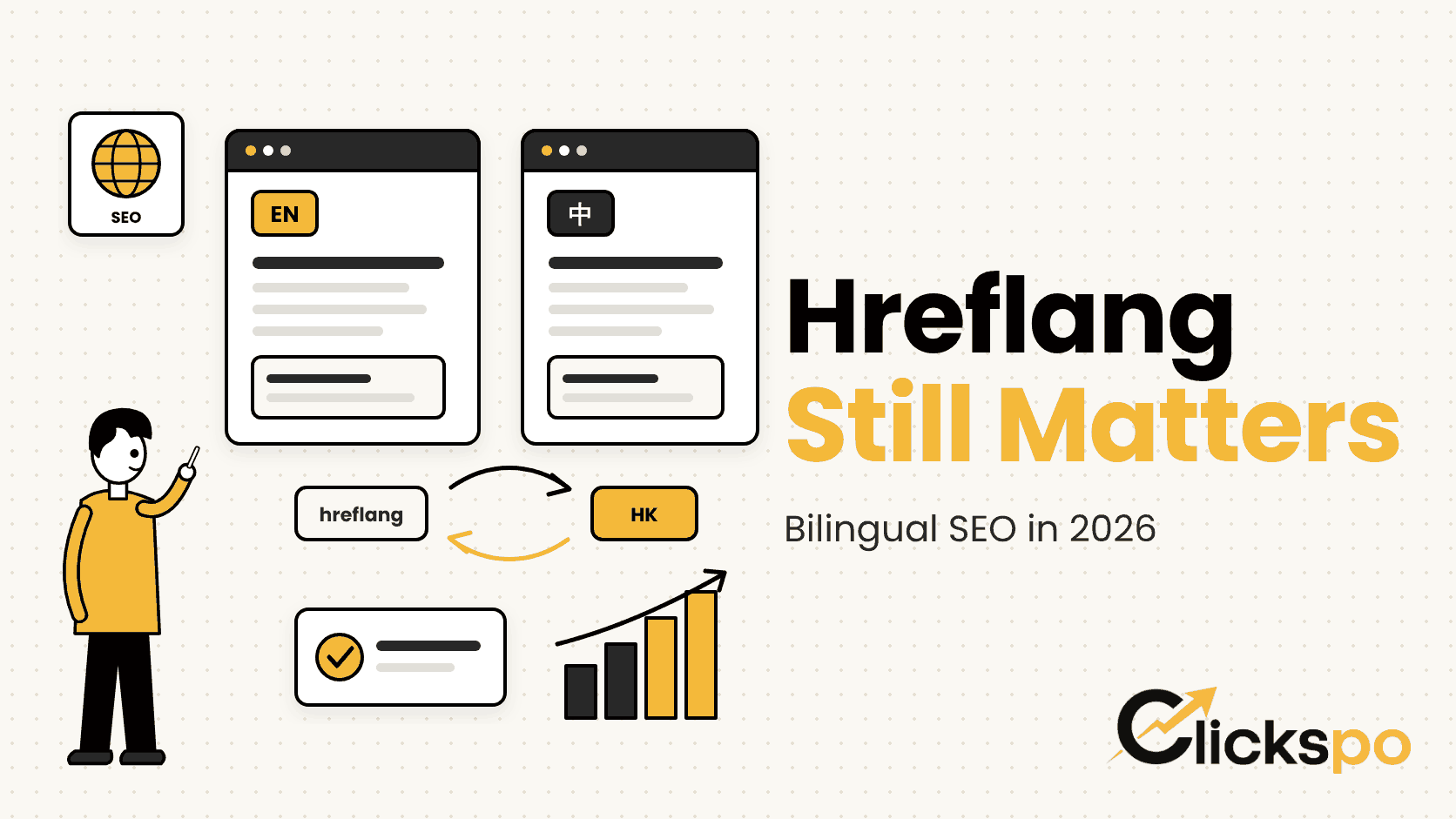
Many crypto projects serve global audiences. If you are targeting users across different language markets, hreflang implementation becomes critical. Getting this wrong means your English page competes against your own Chinese or Japanese version.
Content Strategy: Topical Authority Over Volume
The biggest mistake we see crypto brands make is producing isolated, disconnected articles chasing trending topics. Google rewards topical authority, meaning sites that comprehensively cover a subject area from multiple angles, not sites that publish one post about every hot topic.
The Ahrefs competitive data reinforces this. CoinGecko ranks for over 139,000 keywords not because it published a high volume of thin posts, but because it built a dense, interconnected content ecosystem covering prices, protocols, exchanges, and education. Coinbase has built a similar structure, with 229,000 ranking keywords generated from comprehensive glossary content, exchange guides, and product explainers.
A strong content architecture for a crypto project might look like this:
Pillar Page: What Is DeFi? A Complete Guide
- Supporting: How liquidity pools work
- Supporting: DeFi vs CeFi compared
- Supporting: Best DeFi protocols by TVL
- Supporting: Risks of DeFi investing
This cluster approach means every supporting article funnels authority back to the pillar, which in turn ranks for the broader term. We cover this content architecture thinking in our guide on SEO strategy for 2026.
Content formats that consistently perform in crypto:
- Glossary pages: Define every term in your ecosystem clearly. These attract educational search traffic at scale
- Comparison pages: “Exchange A vs Exchange B” content performs extremely well with high commercial intent
- Data and research: Original data, charts, and protocol comparisons attract backlinks naturally
- How to guides: Step by step tutorials for technical processes rank consistently and build trust with developer audiences
Link Building for Crypto Websites
Backlink acquisition in crypto is both easier and harder than in most industries. Easier because the community is active and press coverage is frequent. Harder because many crypto backlinks come from low quality sources, forums, or link farms that can actively hurt your domain authority.
What Actually Works
- Earned media from crypto publications: CoinDesk (DR 83), Decrypt, The Block, and Cointelegraph pass genuine authority. Getting covered here requires either newsworthy announcements or strong PR relationships
- Research and data reports: Publish original tokenomics analysis or protocol comparisons. Other sites cite these naturally
- Community partnerships: AMA sessions on Reddit’s crypto subreddits, podcast appearances, and Twitter Spaces that link back to your content
- Developer documentation and GitHub: For Web3 projects, quality documentation linked from GitHub or developer forums carries real weight
The domain authority benchmarks from Ahrefs make the link building goal concrete. Bitcoin Magazine sits at DR 80 with 25,000 monthly visitors from roughly 10,600 ranking keywords. That level of authority was not built through purchased links. It was built through consistent editorial output, earned media, and community trust built over years.
What we advise against: mass directory submissions, purchased backlink packages targeting crypto anchor text, and link exchanges with low authority domains. These tactics leave footprints that are increasingly easy for Google to detect and penalise.
Optimising for AI Search Visibility
AI driven platforms like ChatGPT, Perplexity, and Google AI Overviews are now a real source of traffic for crypto content. Our team has written extensively on what AI search optimisation involves and how it differs from traditional ranking.
For crypto sites, the key is answer optimisation. Structure your content so that specific questions have clear, direct answers. Use:
- Concise definition blocks at the top of explanatory content
- FAQ sections with precise answers under each question
- Comparison tables that summarise complex information at a glance
AI models pull from content that is structured, authoritative, and well cited. Sites that have built genuine E-E-A-T signals tend to be cited more frequently in AI generated responses, which is becoming a meaningful visibility channel for crypto brands.
Measuring SEO Performance in Crypto
Given the volatility of crypto markets, tracking SEO performance requires separating market driven traffic spikes from genuine organic growth. The 460% surge in “crypto seo” searches between August 2024 and April 2025 that Clickspo identified in Ahrefs is a good example of how market cycles distort organic data. Your rankings may be stable while traffic swings dramatically simply because the total search pool expanded or contracted.
| Metric | What to Track | Why It Matters |
|---|---|---|
| Branded vs non branded traffic | Ratio in GSC | Shows if SEO is building reach beyond your existing audience |
| Keyword position trends | Ahrefs or GSC | Confirm ranking progress separate from volume fluctuations |
| Crawl coverage | GSC index report | Ensures key pages are actually being indexed |
| Backlink velocity | New referring domains monthly | Steady growth signals healthy authority building |
| Traffic potential vs actual traffic | Ahrefs comparison | Identifies pages under performing relative to their keyword potential |
| Organic conversions | Goal completions in GA4 | Connects SEO to actual business outcomes |
We also track local SEO signals separately for any crypto clients that have a physical presence or are targeting region specific regulatory markets. Our SEO vs Google Ads comparison is useful context here too, particularly for crypto brands weighing whether paid or organic deserves priority given ad platform restrictions.
FAQs About Crypto Website SEO
Does Google penalise crypto websites?
Google does not penalise crypto sites by default, but it applies stricter quality standards because crypto falls under YMYL guidelines. Sites that lack clear authorship, have thin content, or make unverifiable claims will struggle to rank regardless of their other SEO work. Building genuine E-E-A-T is the foundation. Ahrefs data shows that every dominant crypto domain carries a DR above 76, reflecting years of credibility signals, not just content volume.
How competitive is crypto SEO based on keyword data?
Extremely competitive at the broad level, but far more accessible in niche and long tail terms. Ahrefs shows “best crypto wallet” at keyword difficulty 94 and “best crypto exchange” at 89. However, terms like “seo for crypto” sit at a KD of just 22, and “blockchain seo agency” at 2. The opportunity is in owning the niche before the market matures, and in building topical depth before competitors do.
How long does SEO take to work for a crypto website?
In our experience, meaningful organic traction typically takes four to six months from the point where technical foundations are solid and content publishing is consistent. Highly competitive keywords around major tokens or exchanges can take considerably longer. Niche protocol or education content often ranks faster, particularly if you are building topical clusters rather than isolated posts.
Should crypto websites use local SEO?
For crypto exchanges or blockchain service providers with a regional focus, yes. A project targeting Hong Kong traders or Singapore based institutional clients benefits significantly from local optimisation signals. Our local SEO service is designed for exactly this type of targeted approach.
What is the best content format for crypto SEO?
Comprehensive pillar pages and in depth guides consistently outperform short blog posts in crypto. Ahrefs data shows that the highest traffic potential keywords in the space, such as “cold wallet crypto” at 34,000 traffic potential and “how does bitcoin work” at 23,000, are won by pages with genuine depth and structure, not thin overviews.
Can crypto websites appear in Google AI Overviews?
Yes, and this is increasingly important. Crypto sites that structure their content with clear answers, use schema markup, and demonstrate strong E-E-A-T signals are more likely to be cited in AI generated search results. This applies to both Google AI Overviews and third party platforms like Perplexity. Treating AI visibility as a separate optimisation layer is something we now include in all technical strategies. Our guide on AI search optimisation covers how to approach this in practice.