
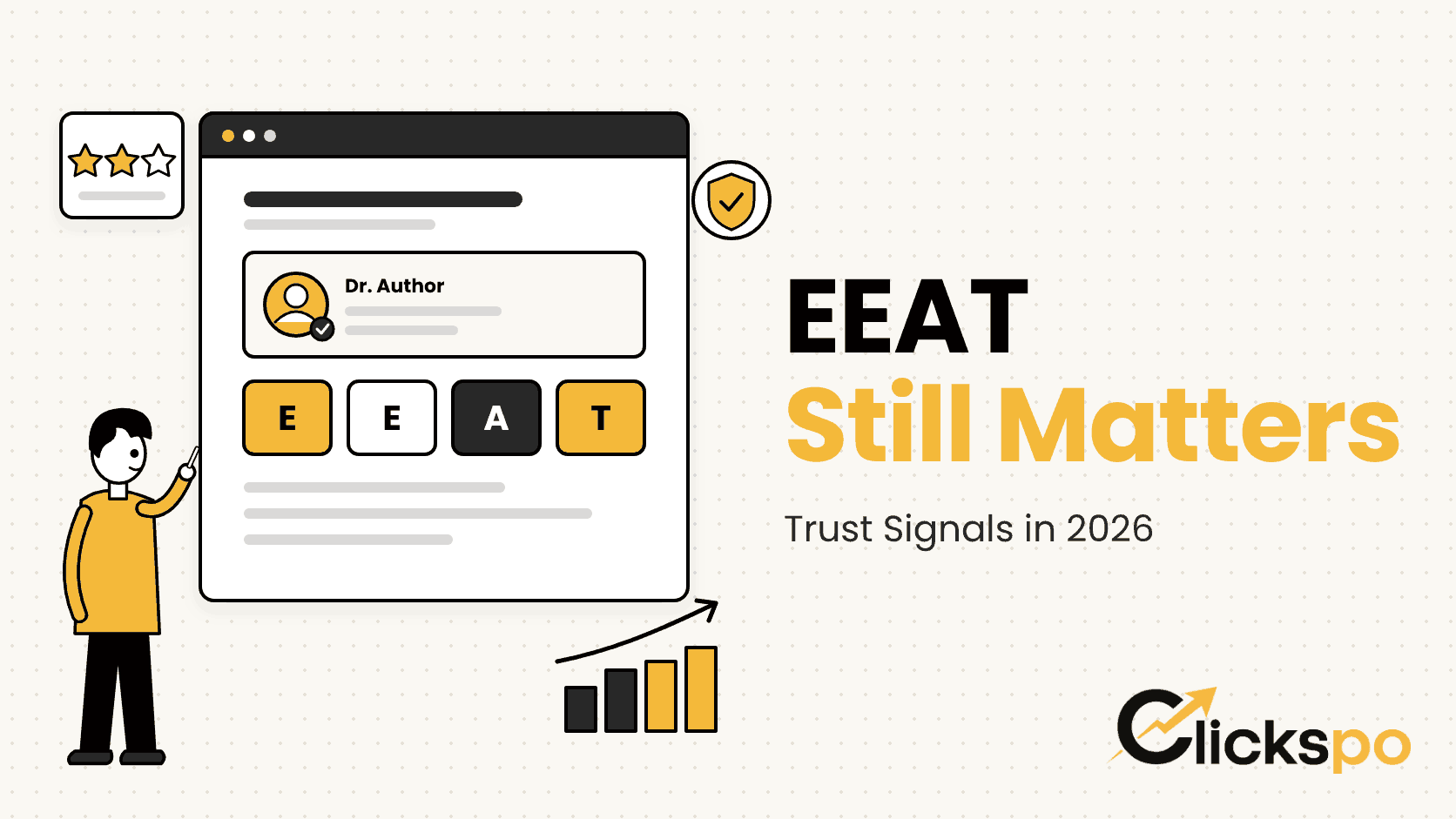
Every few months a new search feature arrives and someone declares that the old rules no longer apply. EEAT is often the first rule people want to retire, because it sounds abstract and nobody can point to a single setting that controls it. Yet when our team reviews sites for Hong Kong clinics, law firms and education providers, the pages that hold up best are the ones that clearly show who wrote them and why that person should be trusted. So is EEAT still important for SEO in 2026? Yes, and AI search has made it more visible.
What EEAT Means in SEO
EEAT stands for Experience, Expertise, Authoritativeness and Trustworthiness. It comes from Google’s Search Quality Rater Guidelines, the document Google gives to the people who assess the quality of its search results. Google added the extra “Experience” in late 2022, recognising that someone who has actually used a product or been through a process often has something useful to say, even without formal qualifications.
Each part of EEAT answers a slightly different question about a page:
- Experience. Has the creator actually done, used or lived through the thing they are writing about?
- Expertise. Does the creator have the knowledge or skill the topic requires?
- Authoritativeness. Is the creator or the website a recognised source on this subject?
- Trustworthiness. Is the page accurate, honest and safe? Google describes trust as the most important of the four.
Interest in the concept remains strong. Ahrefs data for the US market shows “eeat” at 2,800 monthly searches and “eeat seo” at 700, with “google eeat” at 600. People are still trying to work out what it means in practice, which is what the rest of this guide covers.
Is EEAT a Ranking Factor?
Not in the sense of a single score. Google has said that EEAT itself is not a specific ranking factor. Quality raters do not change rankings directly either. Their ratings help Google evaluate whether its systems are surfacing helpful, reliable content, and those systems then use many signals that line up with what raters look for.
That distinction matters, because it changes how you work on it. You cannot install EEAT with a plugin. You build it through the same things a careful reader would look for before trusting a page:
| EEAT element | What a reader looks for | How we show it on a page |
|---|---|---|
| Experience | Proof the writer has done this | Real case examples, original photos, specific details from practice |
| Expertise | Relevant knowledge or qualifications | Author bio with credentials, accurate terminology, clear explanations |
| Authoritativeness | Recognition from others | Mentions and links from respected sites, media coverage, professional memberships |
| Trustworthiness | Honesty and accuracy | Contact details, sources, review dates, secure site, clear policies |
Google’s guidance on helpful content encourages creators to think about who created the content, how it was produced and why it exists. EEAT is a practical way of answering those three questions on every page.
Why EEAT Matters Most for YMYL Topics
Google applies the highest standards to what it calls “Your Money or Your Life” topics, often shortened to YMYL. These are subjects where poor information could affect someone’s health, finances, safety or legal position. For these pages, the quality rater guidelines ask for a much higher level of trust.
In Hong Kong, many of the businesses we work with sit squarely in this category:
- Medical and dental clinics. Symptom pages, treatment explanations and aftercare guides.
- Law firms. Articles on personal injury claims, probate, divorce or criminal procedure.
- Financial and insurance services. Content on investments, mortgages, tax or policy coverage.
- Immigration and visa consultants. Guidance on eligibility, documents and application steps.
- Mental health services. Information on conditions, therapy options and when to seek help.
For a clinic, a strong page usually means content written or reviewed by a named doctor or registered practitioner, with their qualifications listed and the review date shown. For a law firm, it means articles attributed to a named solicitor or barrister, with care taken to note that the content is general information rather than legal advice. Professional bodies in Hong Kong also have their own rules on how clinics and firms may promote themselves, so EEAT work in these sectors always needs to respect those codes.
Author Pages, Bios and First Hand Experience
The most practical place to start is the author. A surprising number of business blogs still publish under “Admin” or a company name, which gives readers and search engines nothing to assess. Every article should name a real person, and that name should link to a proper author page.
A useful author page includes:
- Full name and role. For example, a dentist and clinic director, or a partner in a litigation practice.
- Qualifications and registrations. Degrees, professional licences and memberships that relate to the topics they write about.
- Relevant experience. Years in practice, areas of focus and the kinds of cases or clients they handle.
- A professional photo. A real headshot, not a stock image.
- External profiles. Links to LinkedIn, professional directories or published work.
- A list of their articles. So readers can see the depth of their contribution.
Experience is the element that generic content struggles to fake. A physiotherapist explaining how they assess a frozen shoulder in their Mong Kok clinic, or a lawyer describing what typically happens at a first probate meeting, adds detail that only comes from doing the work. A short conversation with the practitioner is often the best way to capture that first hand detail, and it is what makes a page worth reading. Adding structured data such as Person and Organization schema then helps search engines connect the author, the business and the content clearly.
Reviews, Reputation and Authority Signals
EEAT is not only about what you say about yourself. The quality rater guidelines specifically ask raters to look for what other people say about a website or creator. Reputation research covers independent reviews, news coverage, awards and mentions from respected organisations.
For local businesses, reviews are a large part of that picture. Here is how we approach them with clients:
- Ask satisfied clients for reviews on Google Business Profile as part of the normal service process, never in exchange for incentives.
- Reply to reviews, including critical ones, in a calm and helpful tone.
- Keep the business name, address and phone number consistent across directories, which is a core part of local SEO.
- Show accreditations, professional memberships and media mentions on the site, with links where possible.
Authority also grows when other credible sites reference your work. A clinic quoted in a health publication, or a law firm cited by a business association, earns the kind of recognition that supports authoritativeness. We explain how that fits into a wider link strategy in our article on whether backlinks still work in 2026.
Why EEAT Matters for AI Search
AI Overviews, ChatGPT, Perplexity and other assistants now answer many questions directly. When they cite sources, they tend to favour pages that are clear, specific and easy to attribute to a credible author or organisation. The same qualities that EEAT describes make content easier for these systems to understand and reference.
In practice, that means a few things work well across both traditional and AI search:
- Clear answers near the top of each section, supported by detail from real experience.
- Named authors and organisations that appear consistently across the web.
- Content that matches the search intent behind a question rather than repeating what every other page says.
- Accurate, regularly reviewed information, especially on YMYL topics.
We cover the wider approach in our guide to AI search optimisation. The short version is that EEAT is no longer only about Google’s blue links. It shapes whether your business is the source an AI assistant chooses to quote.
FAQs About EEAT and SEO
How long does it take to build EEAT?
It builds gradually, because reputation and recognition take time to accumulate. The quickest improvements are on site, such as adding author bios and contact details. Off site signals like reviews and mentions grow steadily as the business keeps doing good work.
Does a small business need EEAT as much as a large brand?
Yes, and small businesses often have an advantage on experience. A specialist clinic or boutique law firm can show detailed, first hand knowledge that large generic sites cannot match. What matters is that the expertise is visible on the page.
Can AI written content show EEAT?
Google’s position is that it focuses on the quality of content rather than how it was produced. Content drafted with AI still needs real experience, expert review and accurate facts to be helpful. We use AI as a drafting aid and always have a subject expert check and add to the work.
Should every page on my site have an author?
Articles and guides should. Service pages, contact pages and product pages usually do not need a named author, but they should still show who runs the business and how to reach them. An About page with team profiles supports trust across the whole site.
Where do I start if my site has no EEAT signals at all?
Start with trust basics: a clear About page, full contact details and named authors on your most important articles. Then review your YMYL content for accuracy and add review dates. A technical SEO audit can also flag missing schema and other gaps.