
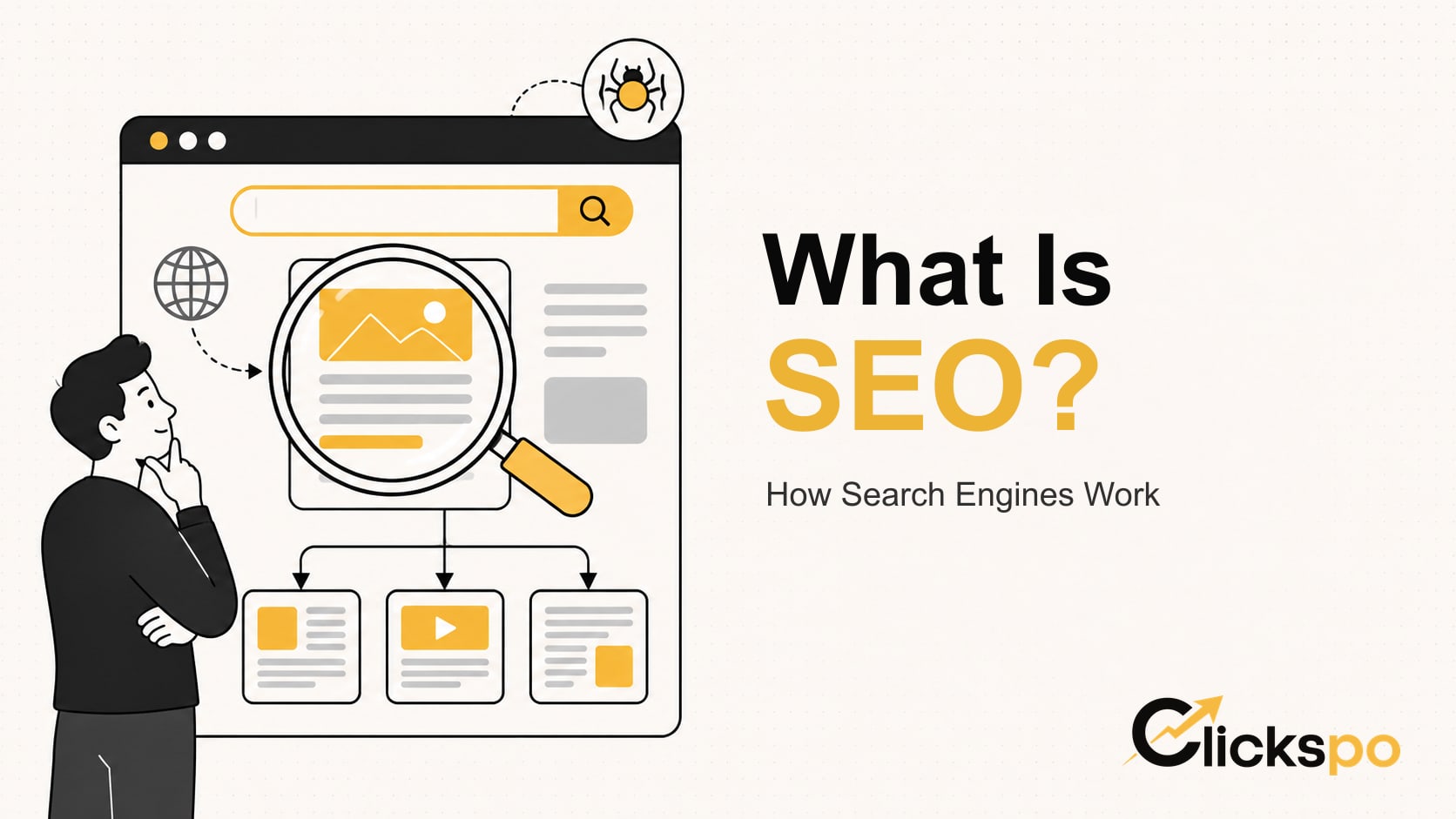
SEO stands for search engine optimisation. It is the practice of improving a website so search engines can discover and understand its pages, and people can find relevant information through unpaid search results. If someone searches for “office chairs Hong Kong”, SEO helps a furniture website become a relevant option for that search. Understanding it starts with three questions: how does a search engine find a page, what makes that page useful, and why might it appear above another result?
TL;DR: What is SEO?
- SEO concerns visibility in organic search results.
- Search engines discover pages, process their contents and select results for each search.
- Keywords describe searches, while search intent explains what the searcher wants to accomplish.
- Rankings depend on multiple signals, including relevance, quality and context.
- Being indexed, ranking prominently and earning a click are different outcomes.
What does “organic search” mean?
Organic search results are listings selected by a search engine without the website paying for that placement. A person types a question or phrase, and the search engine chooses pages it considers relevant. SEO aims to improve a website’s visibility within those results.
“Organic” does not mean that a website automatically receives visitors or that maintaining it costs nothing. It describes how the listing is earned. A business can invest in its content and website without paying an advertising fee for each organic click.
A results page may contain several formats, including advertisements, maps, product listings and ordinary website links. Their appearance depends on the search. SEO is therefore more specific than simply “being somewhere on Google”.
How do search engines find and rank pages?
Search engines do not read the entire internet afresh whenever someone searches. They discover and process pages beforehand, then use that information to produce results. For a website owner, three stages explain the basic process.
| Stage | What happens | What it means for your website | What this stage does not guarantee |
|---|---|---|---|
| Crawling | Automated programs visit pages and retrieve their contents | A search engine needs access to discover what a page contains | That the page will be indexed, shown to searchers or ranked for any particular keyword |
| Indexing | The search engine processes information and may store the page in its index | A published page is not necessarily indexed or available to appear in results | That it will appear prominently for the searches you care about or attract relevant visitors |
| Serving and ranking | Systems select and order results for a particular search | An indexed page still needs to be relevant and competitive for that search | That every searcher will see the same results or choose your business |
These stages explain why publishing a page and appearing prominently are separate events. A page might be accessible but not indexed, or indexed without ranking well for the searches its owner wants.
Links help search engines discover pages and understand relationships between them. A menu connects a homepage to service pages; an article can point readers towards a more detailed explanation. Our guide to internal linking explores how those connections work within a website.
What are keywords and search intent?
A keyword is a word or phrase someone searches for. It might be broad, such as “office chair”, or specific, such as “ergonomic office chair for a small desk”. Despite the name, a keyword can contain several words or a complete question.
Search intent is the purpose behind that phrase. Consider how these searches differ:
- “What is an ergonomic chair?” The person wants an explanation. A clear educational article can answer the question before they decide whether they need that type of chair. They may be learning without any immediate intention to buy.
- “Best ergonomic chairs for small desks” The person is comparing options. Dimensions, suitability and practical differences are likely to matter more than a general definition. A comparison table may help them narrow down their choices.
- “Buy ergonomic chair Hong Kong” The person is closer to purchasing. Available products, prices, delivery information and an easy buying process become more useful than background reading. A relevant category page can offer several suitable products together.
This is why adding the same keyword to every paragraph does not make a page more relevant. The page must satisfy the reason for the search. Learn more about search intent and keyword choice.
Why does one page rank above another?
Search engines use multiple signals to select results. There is no single score a website owner can adjust to guarantee first place. Relevance matters, but so do the usefulness and reliability of the information and the context of the search.
For example, a detailed chair buying guide may suit a comparison query, while a nearby showroom may be more useful for someone looking for a place to visit. The strongest result depends on the question being asked.
The fundamentals work together:
- Clear subject and purpose: Descriptive titles, headings and content help communicate what a page covers. They should accurately reflect the information a visitor will find after opening it. A vague title can leave both readers and search engines guessing.
- Useful, reliable information: Specific explanations, accurate details and evidence of relevant experience help readers assess a page. Repeating general claims gives them less reason to trust the answer. For a retailer, this might mean original product measurements.
- Access and connections: Pages need to be accessible to search engines. Relevant links within a website and references from other websites can support discovery and provide additional context.
Good SEO makes useful information easier to find and understand. It cannot turn an irrelevant page into the best answer merely by adding technical labels.
Is SEO about a whole website or individual pages?
Both. Individual pages appear for searches, while website structure helps those pages make sense together. A furniture shop’s homepage, chair category and delivery information each serve different purposes. They should not all attempt to answer the same question.
That is also why a website does not have one universal “Google ranking”. Different pages can appear at different positions for different searches. Language and location can change the results people see. A Hong Kong business should consider which pages answer its customers’ English and Traditional Chinese searches, rather than assuming one page suits everyone.
To understand how a provider puts these principles into practice, read our guide to what SEO services include, covering the work delivered, responsibilities and measurement.
Frequently asked questions
Does a website need a blog to appear in search?
No. A product page, category page, service page or homepage can appear in organic results. A blog is useful when an article is the right format for answering a question. Publishing articles is one way to address search demand, rather than a requirement for every website.
Is SEO just adding keywords to a page?
No. Keywords help you understand how people search, but SEO also concerns access, relevance, information quality and the connections between pages. Search engines can understand related wording, so you do not need to repeat every possible phrase exactly.
Is SEO the same as Google Ads?
No. Google Ads provides paid advertising placements, while SEO concerns organic visibility. Paying for advertising does not purchase a higher organic ranking. Our SEO versus Google Ads comparison explains the practical differences.
Why does my website appear when I search its name, but not its products?
Searching for a distinctive business name gives the search engine a specific destination to find. A product search creates a broader competition between possible answers. Appearing for your name therefore does not mean your pages are already competitive for general product searches.
Does a higher ranking always mean more customers?
No. A prominent position only helps commercially if the search reaches suitable people. Some searches attract readers who want information but have no reason to buy from you. Relevant traffic, clear information and a suitable next step all influence what happens after the click.